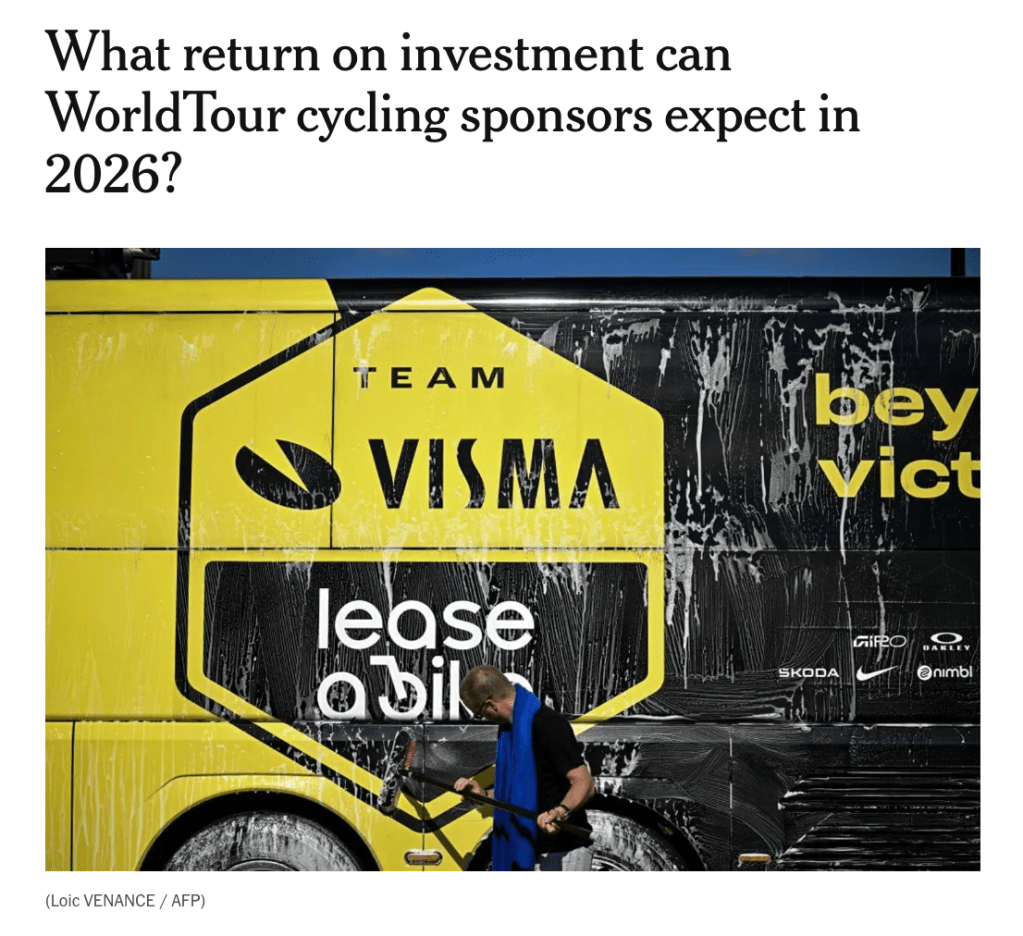
It’s a paradox of cycling that the team who is set to win the Giro d’Italia later today with Jonas Vingegaard — its third Grand Tour win out of the past four held — is currently without a main title sponsor for next season.
In a sport like cycling where title sponsorship often provides at least 75 per cent of a team’s revenue, that looks like a major crisis. Yet executives at Visma-Lease a Bike are not worried.
“Once we’re in talks with them, brands see that cycling is a really valuable proposition and they’re flabbergasted by our reach and what we can do compared to investments in other sports,” Visma-Lease a Bike’s chief business officer Jasper Saeijs tells The Athletic.
Visma’s own experience is testament to that: since partnering with the team in 2019, the Norwegian software company’s revenues have more than doubled to almost €3billion. That’s a very strong return on investment (ROI). Having fulfilled its mission of global brand expansion, Visma now prefers to remain as a minor partner as annual team budgets creep towards and past €60m.
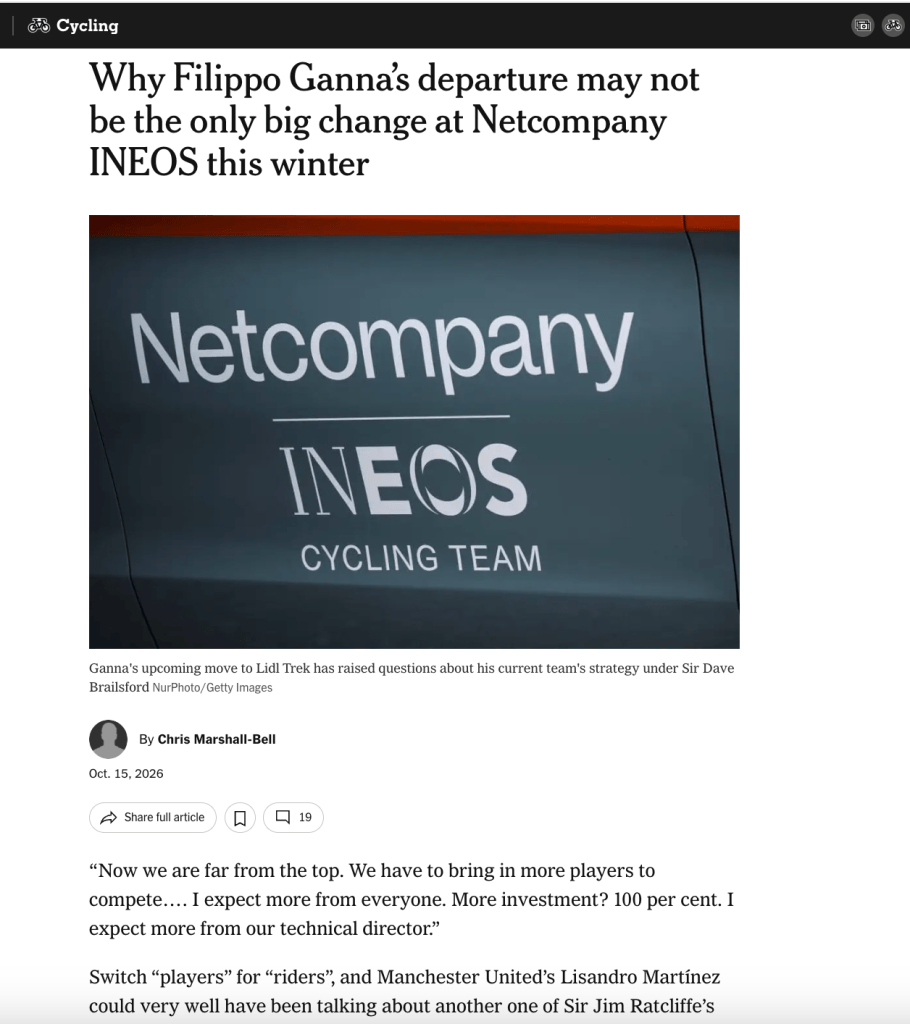
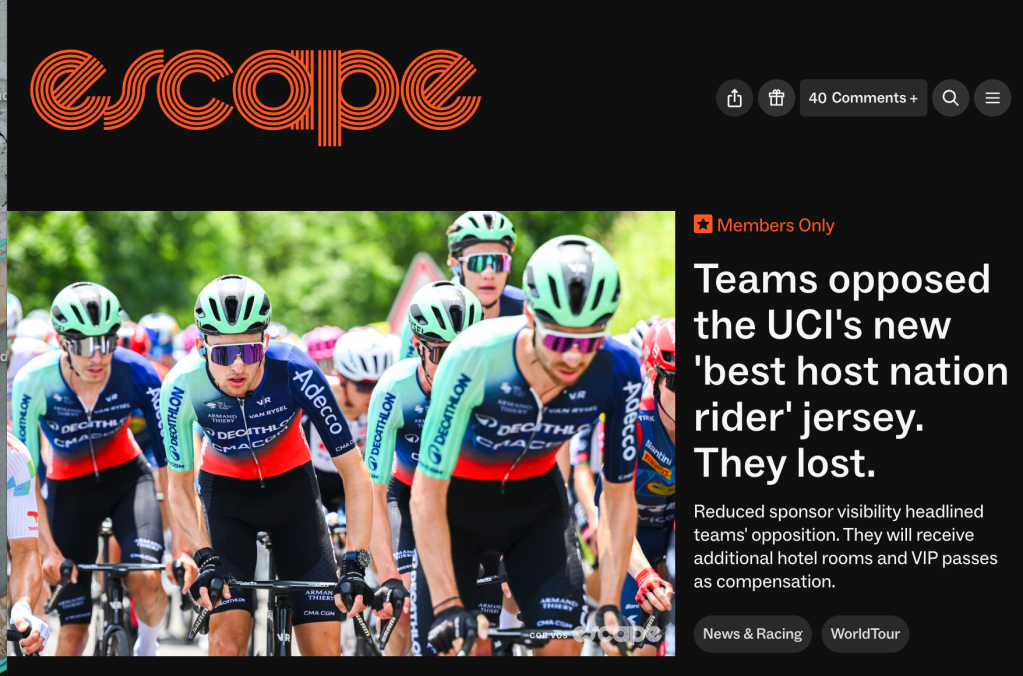
The team’s confidence in securing new naming partners is bolstered by the arrival of major European brands such as Lidl, Red Bull and Decathlon into the sport. Just recently, Danish IT business Netcompany became the latest to be persuaded, agreeing to part with €100m over the next five years to take main naming rights of the British WorldTour team Ineos Grenadiers.
More and more business leaders are becoming convinced that naming a Tour de France team after their company is the best form of marketing.
This article was published by The Athletic/New York Times in May 2026. You can read the full article here.