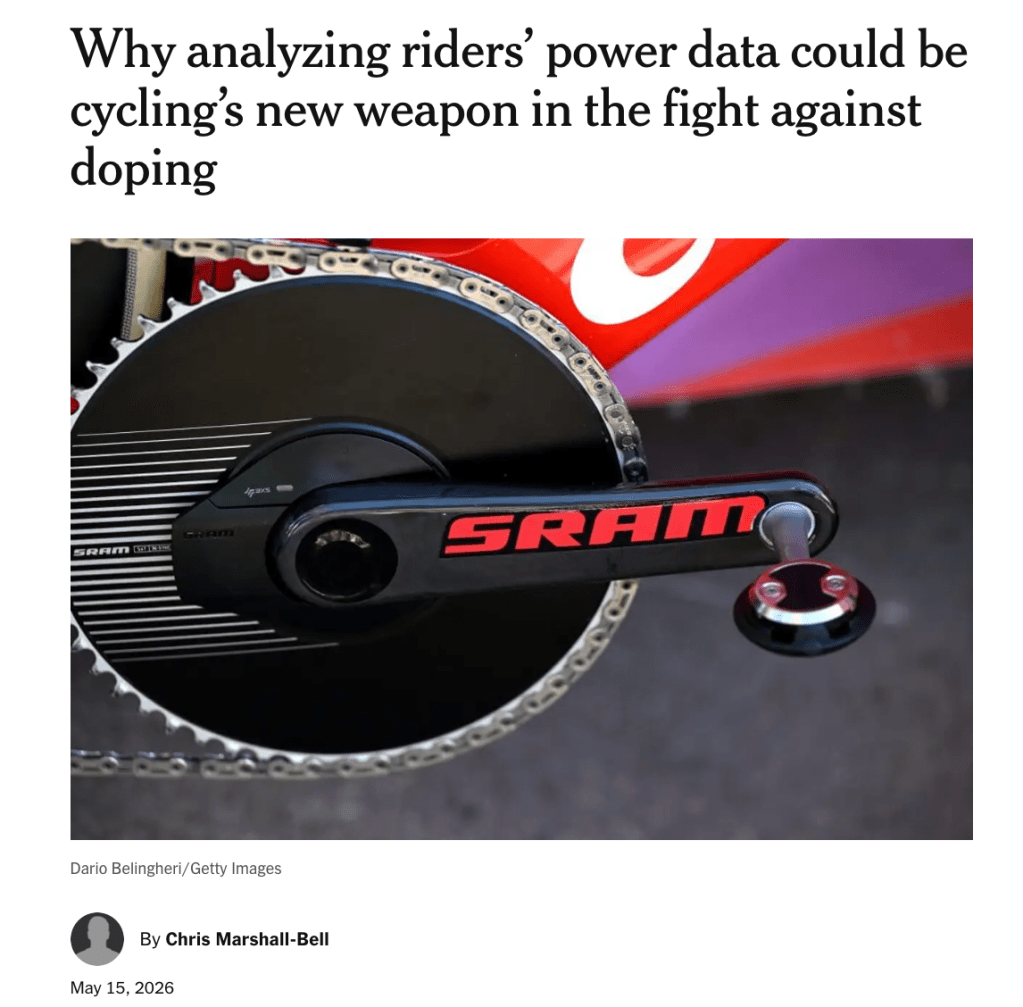
In cycling’s ongoing fight against doping, investigators are turning — with the blessing of several major WorldTour teams — to the very thing cyclists are most protective of to detect signs of possible cheating: their power files.
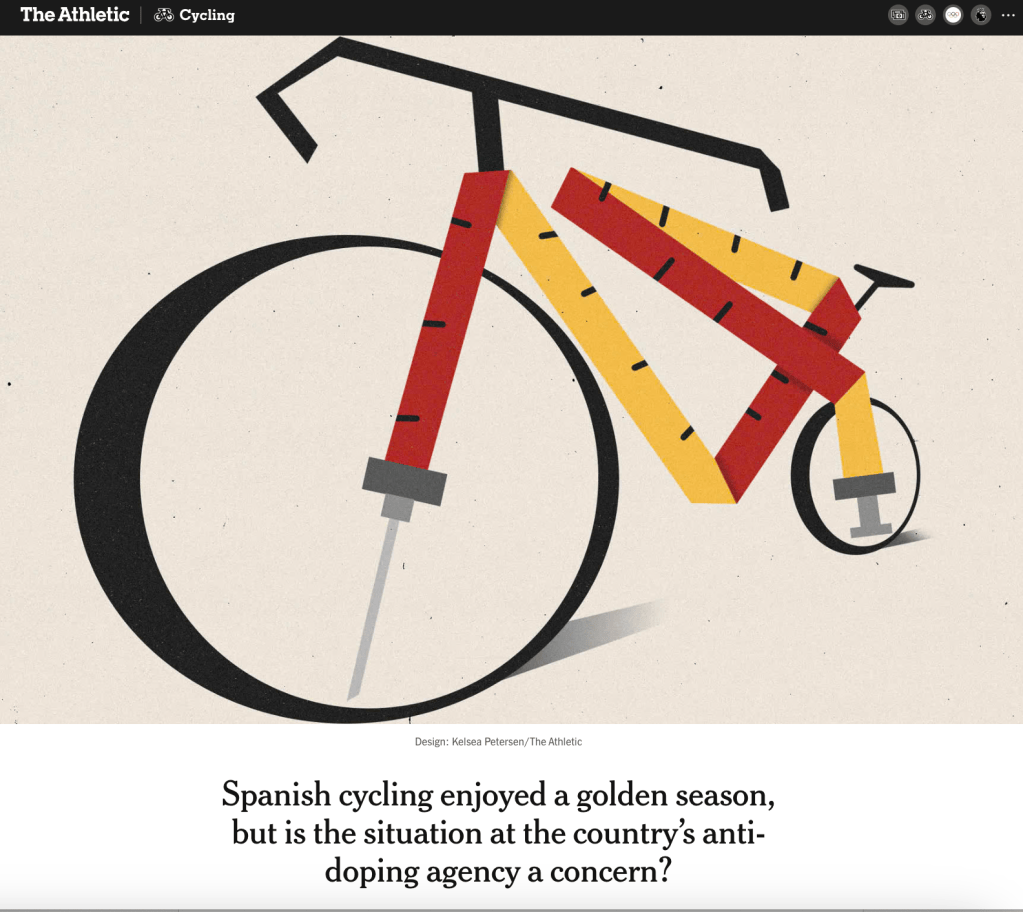
The International Testing Agency (ITA), the body that oversees anti-doping controls for the Olympic Games and for over 80 sporting federations including the International Cycling Union (UCI), began a two-year feasibility study at the start of this season to determine if unusual spikes in a rider’s power data could indicate the use of prohibited substances.
It is essentially the technological equivalent of the athlete’s biological passport (ABP) which monitors an athlete’s blood and urine levels over time. If biological markers differ from the athlete’s established normal range, it could represent the presence of doping products. The ABP was brought in in 2008 and has led to numerous sanctions of many athletes across a number of sports.
Approximately 60 riders from five men’s WorldTour teams have been sharing their power data with the ITA in the past few months, with Visma-Lease a Bike and Decathlon CMA CGM among them. In Jonas Vingegaard and Paul Seixas, those two teams account for two of the big favourites for this year’s Tour de France, though it’s unsure who exactly from the teams is volunteering their data.
Jayco-AlUla, Picnic PostNL Raisin and Cofidis have also given their consent, while Uno-X Mobility and second-tier team Tudor Pro Cycling recently agreed to join the trial period.