Spain enjoyed a glorious late summer of cycling success.
Building on, and perhaps inspired by, the country’s soccer team winning the World Cup in July, Enric Mas ended the country’s 12-year wait for a home win at the Vuelta a España.
It was even sweeter that the 31-year-old achieved his career-best result riding for Spain’s only WorldTour team, Movistar. Next year, the reigning champion of the women’s Vuelta, 23-year-old sensation Paula Blasi, will join Mas in representing Movistar. The team in blue is rising once again.
A fortnight after Mas’ victory, Spain topped the medal table at the Road World Championships for the first ever time, claiming three golds across the men’s and women’s junior races, and a silver and bronze in the men’s under-23 events.
The future is bright for a nation that has won 12 men’s Tour de France titles with seven riders — but none since Alberto Contador in 2009.
Yet it’s not all champagne and sparkles for Spanish sport, which has also seen success in athletics and tennis this year.
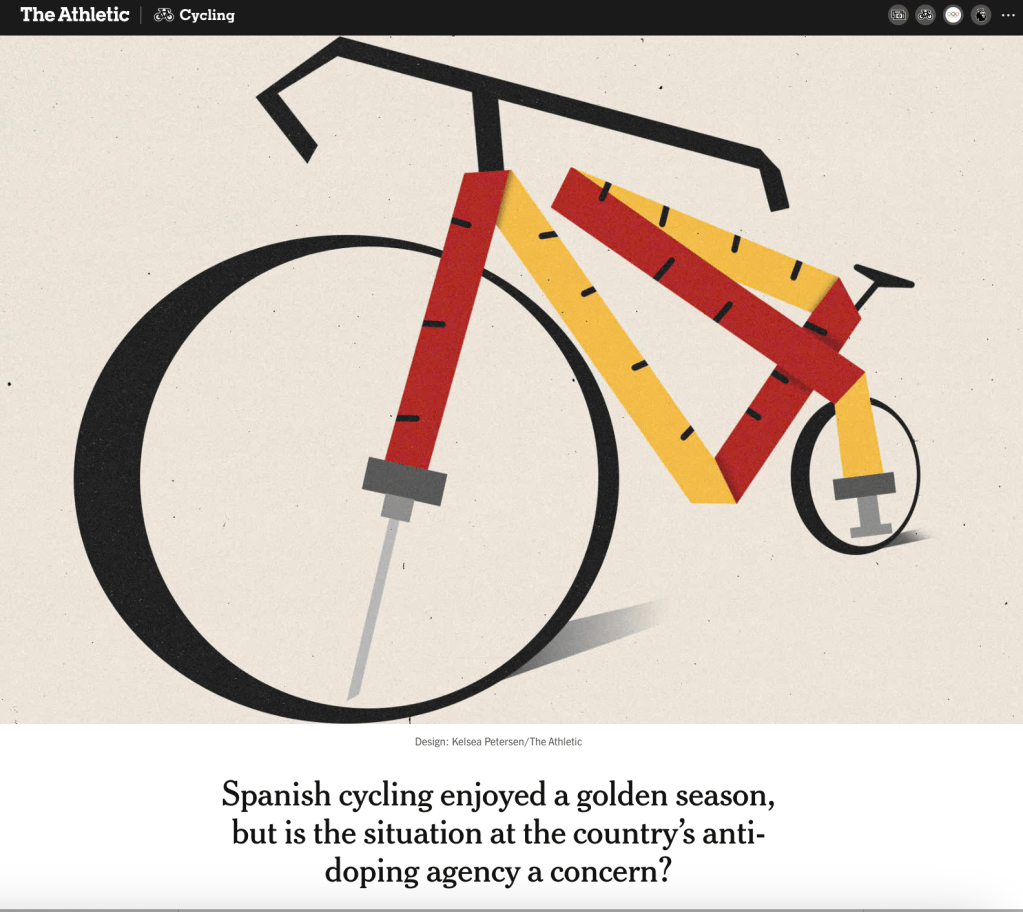
A murky subplot lurks in the background, threatening to overshadow the recent glory, while raising questions about the state of anti-doping in Spain, which is overseen by the national anti-doping agency, CELAD.
The World Anti-Doping Agency (WADA) has informed The Athletic that since 2024 it has “appealed eight CELAD cases to the Court of Arbitration for Sport, including three in 2026 alone.” WADA will only intervene in cases if it considers procedures have not been followed.
“Considering we appeal in the region of 30 cases a year across all sports and all countries, to have three from the same Code Signatory (effectively an anti-doping organisation) in the first nine months of a year is unusual,” a WADA spokesperson said.
Asked if WADA retains confidence in CELAD, the spokesperson added: “I would not comment specifically on that at this time.”
This article was published by The Athletic in October 2026. To read the full article click here.