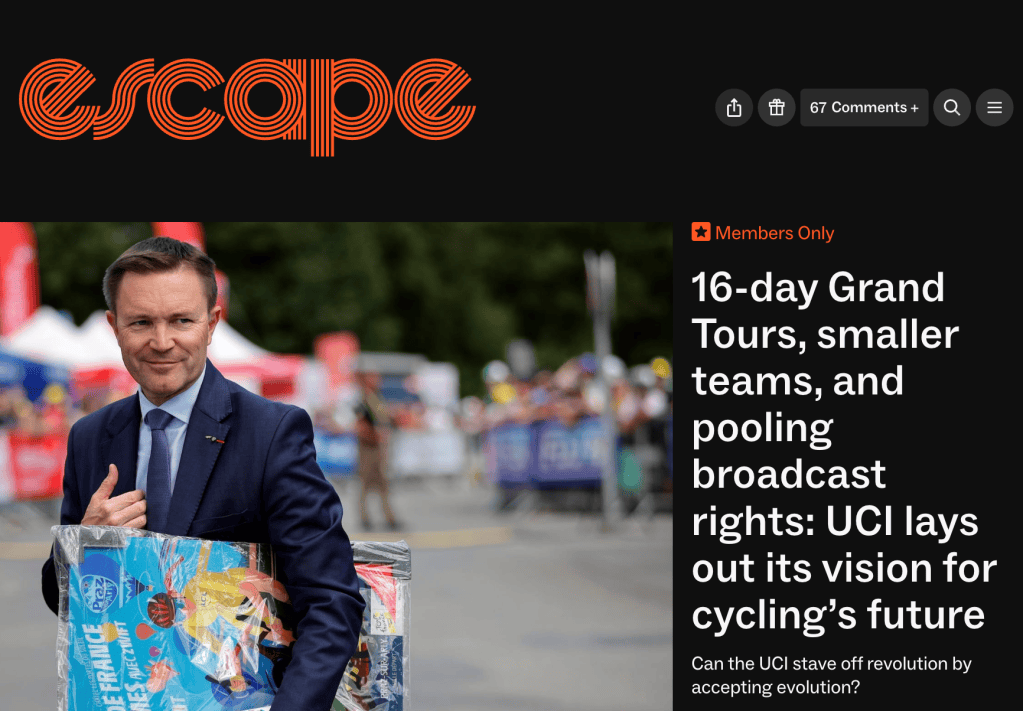
Talk of economic and structural reform has been a common theme in cycling in recent years, with proponents of the now-canned One Cycling and most recently-launched venture regularly claiming that the sport is a sleeping giant that can grow significantly with the right business plan. Even the International Cycling Union (UCI) is now getting in on the act, inviting ideas earlier this month on how the sport could be restructured.
But how much money is already in the sport? And if broadcast rights and profits were to be more evenly distributed among stakeholders, including teams, would it make that much of a difference to each respective party’s financial health?
Escape Collective has obtained official figures from the UCI, presented at the WorldTour seminar in December, that illustrate how much team budgets are increasing year-on-year. For the 2025 season, the combined budgets of all 18 men’s WorldTour teams was €570 million, up from €499 million a year before. That’s an average annual budget of over €31 million per team.
The growth has continued for this season. While the UCI figures for 2026 are listed at €673 million, they include two ProTeams – Cofidis and Pinarello-Q36.5 – that applied for but were not awarded WorldTour status. Even discounting them, however, the total budget across the WorldTour is likely around €620–€630 million, meaning that in just two years, the average cost of fronting a WorldTour team has risen 25%.
Additionally, Escape Collective has been through the financial accounts of the three biggest race organisers – Amaury Sports Organisation (ASO), RCS and Flanders Classics – to figure out how profitable elite level bike races are.
This article was published by Escape Collective in February 2026. To read the full article click here.