My old road bike, a 2013 Lapierre Audacio 400 CP, is no longer in a fit state to be ridden for several hours at a time. The saddle has a burn hole in it; the chain is so stretched it’s probably an entire chain link longer than it’s meant to be; and half the left brake lever is missing. I could go on with its defects, but you get the picture: it’s a bit knackered. In the past week, however, my once pride and joy which I’ve used to bomb around town on for the past few years, hoping it never catches the sight of a disapproving bike mechanic, has become a lifesaver.
Since the summer of 2022, I’ve called Valencia, Spain my home. It’s a wonderful city. But as you will know, on Tuesday, October 29, the region was struck by Spain’s – and Europe’s – deadliest natural disaster for decades. Thanks to the River Turia being diverted to the south of Valencia following a flood in 1957, the city itself was not inundated with water, but 79 towns and villages were. I’ll repeat: seventy-nine towns and villages.
845,000 people were affected; 325,000 people live in ‘Zone Zero’ where water reached two metres high; 75,000 houses were flooded; 44,000 businesses were implicated; more than 90,000 cars were destroyed; 650km of roads were damaged; and at the time of publication 217 people are known to have died and 89 remain missing. The numbers are catastrophic.
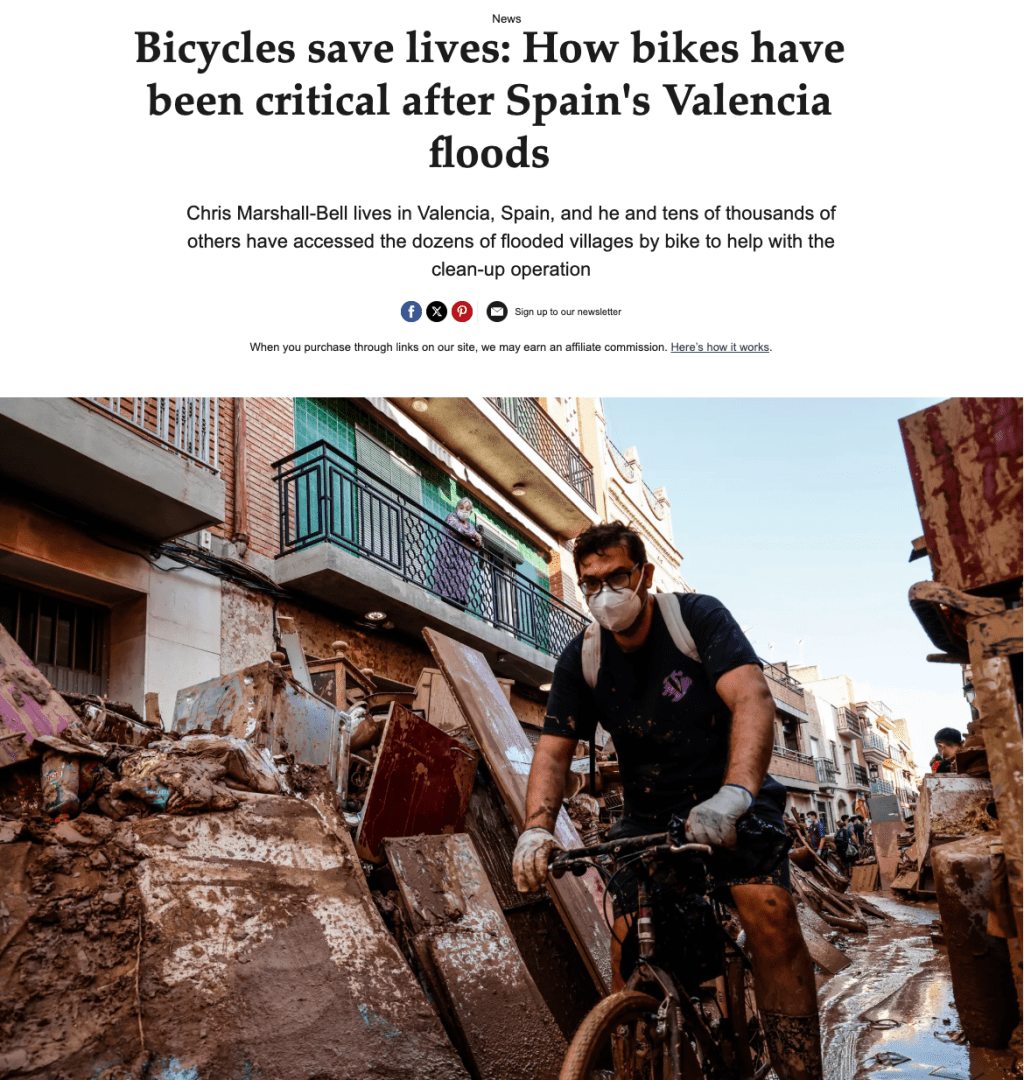
Villages I frequently cycle through were converted into a real-life end-of-the-world film set in less than an hour, with destroyed cars, thrown-away furniture and uprooted infrastructure sitting on top of 30cm of thick mud. So much is ruined. The damage caused by the river tsunami – because that’s what it was, a river tsunami – is truly unfathomable, incomprehensibly devastating, and unbearably heartbreaking.
Over the past week, I and tens of thousands of others have been going to the affected zones every day to help with the mammoth clean-up operation. With so many bridges swept away and roads closed to allow the unobstructed passage of emergency and military vehicles, the only way to access these towns and villages has been by walking or by bike.
This article was published on Cycling Weekly’s website in November 2024. Read the full article here.